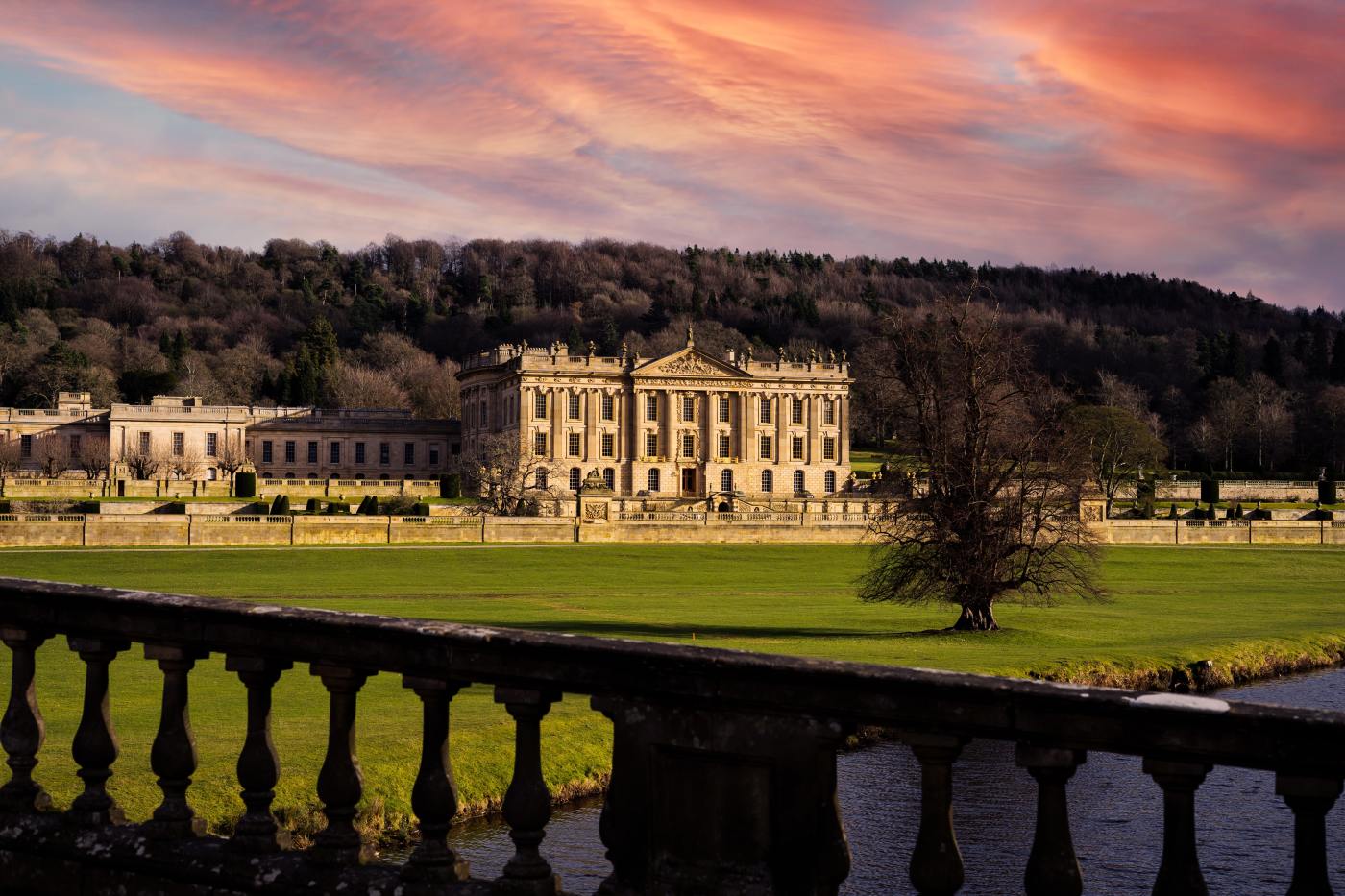
This post first appeared on RTÉ Brainstorm on 1 February 2021 and can be found here.
First published on 28 January 1813, Jane Austen’s Pride and Prejudice has endured for two centuries as a razor-sharp social commentary and beloved romance. It has, as a result, spawned numerous adaptations and interpretations. Andrew Davies’s 1995 miniseries has clung fast to our cultural consciousness like a wet white shirt to Colin Firth’s Mr Darcy, while Keira Knightley’s Elizabeth Bennet strolled through sunlit fields dressed as folklore-era Taylor Swift in Joe Wright’s 2005 film version. In 2017, it was announced that a further television take on the classic would explore the ‘darker’ side of Pride and Prejudice, scripted by playwright Nina Raine.
Helen Fielding, moreover, cites Austen as the inspiration for her glorious satire Bridget Jones’s Diary (2001, adapted from Fielding’s 1996 novel), while Gurindher Chadha gave the story a Bollywood revamp in 2004’s Bride and Prejudice. P.D. James’s murder-mystery sequel Death Comes to Pemberley (2011) became a three-part miniseries in 2013; and, in yet another parallel Derbyshire, the Bennet sisters are trained in self-defence to fight off agents of the apocalypse in Pride and Prejudice and Zombies (2016, adapted from the 2009 novel by Seth Grahame-Smith).
The list goes on (and on); ITV’s 2008 series Lost in Austen sees a twenty-first-century Jemima Rooper stumble into Longbourn through a (never fully explained) wormhole in her bathroom, while in Austenland (2013), Keri Russell stars as a woman obsessed with Mr Darcy who spends her life savings on a trip to a Jane Austen-themed holiday resort. Some Pride and Prejudice fans may even have been fortunate enough during the festive season to see its characters (very loosely) appropriated by the Hallmark Channel, in the form of Pride, Prejudice, and Mistletoe (2018) or Christmas at Pemberley Manor (2018).
Netflix’s recent success with the glittering Regency romp Bridgerton (adapted from novels by Julia Quinn) shows an appetite for fresh, sumptuous period drama with an indulgent blend of wit, scandal, adventure, and romance. Rather than insisting on endless updates of Austen’s major works, it would be refreshing to see studios sharing out their corset budget among lesser-known (yet no less accomplished) writers of the long eighteenth century. In Austen’s first completed novel Northanger Abbey (published posthumously in 1817), she holds up Frances Burney’s Cecilia (1782) and Camilla (1796), and Maria Edgeworth’s Belinda (1801) as shining examples of ‘work in which the greatest powers of the mind are displayed, in which the most thorough knowledge of human nature, the happiest delineation of its varieties, the liveliest effusions of wit and humour, are conveyed to the world in the best-chosen language.’ (Edgeworth, by contrast, found Northanger Abbey to be ‘one of the most stupid, nonsensical fictions I ever read’, preferring Austen’s Persuasion.)
Burney and Edgeworth both achieved widespread success and literary celebrity during their lifetimes, their novels sparkling with shrewd observation and repartee. Burney’s Evelina (1778) is a comic delight about a young woman’s social faux pas as she tries to navigate polite society, the dramatis personae a rollicking circus of fops and social climbers, vulgar cousins and drunken sailors, highwaymen and harlots. Edgeworth’s Belinda is scarcely less colourful, its titular heroine allied with the bewitching bel-esprit Lady Delacour in a tale of fashion, courtship, gossip, homoerotic subtext, occasional cross-dressing, and an iconic duel in which Delacour manages to accidentally shoot herself in the breast.
The long eighteenth century is simply teeming with works that would make for exciting and inventive adaptation. Charlotte Lennox’s The Female Quixote (1752) is the comic tale of Arabella, a heroine who reads too many romance novels and subsequently expects her life to be filled with the same level of adventure and melodrama; surely a theme of enduring relevance that resonates as much in the twenty-first century as in the eighteenth. Elizabeth Inchbald’s 1791 novel A Simple Story examines gender roles and women’s education (plus one of its female protagonists falls in love with a Catholic priest, an instant draw for the Fleabag demographic), while Mary Hays’s Memoirs of Emma Courtney (1796) was criticised by eighteenth-century moralists for its proto-feminist defence of female sexuality. Amelia Opie’s Adeline Mowbray (1804) explores society’s attitudes towards female virtue and respectability, through its heroine’s rejection of the institution of marriage (loosely based on the relationship between Mary Wollstonecraft and William Godwin). Insightful and intelligent, often political, frequently funny and consistently entertaining; these literary sensations of the long eighteenth century are crying out to be translated to the screen.
Internet discourse around Austen adaptations often asks the question, ‘do we really need another one?’ My answer is far from an outright ‘no’; I am personally holding out hope for a remake of Pride and Prejudice in which Bridgerton’s Regé-Jean Page plays Mr Darcy opposite a full cast of Muppets. There is much to love, learn from, and often laugh at in the seemingly endless tributes to Austen’s beloved works; yet it would be a shame for film and television creators to confine themselves to repeatedly rehashing her novels when there is a wealth of rich material to be mined from Lennox, Burney, Edgeworth, Hays, Inchbald, Opie, and many more. It is a truth not yet universally acknowledged, but a truth nonetheless.
Cover photo by Ryan Grice on Unsplash


Leave a Reply