On Monday morning I drank three black coffees before nine a.m. and spent a slightly manic five minutes on the radio rabbiting about books. My friend (and prolific literature-fiend) Emma had referred me to a BBC researcher and they asked if I’d be part of a chat about book sales and social media. I was listed as ‘writer and book blogger, Gráinne O’Hare’.
Calling myself a book blogger is a bit like calling Taylor Swift a film actress, in that my contributions to the medium have been sporadic and mostly mediocre (sorry Taylor). I resurrect my book account on Instagram around twice a year with the renewed vigour and optimism of someone finally deciding to make use of their gym membership and then abandoning it just as quickly. I am not a very committed or accomplished book blogger.
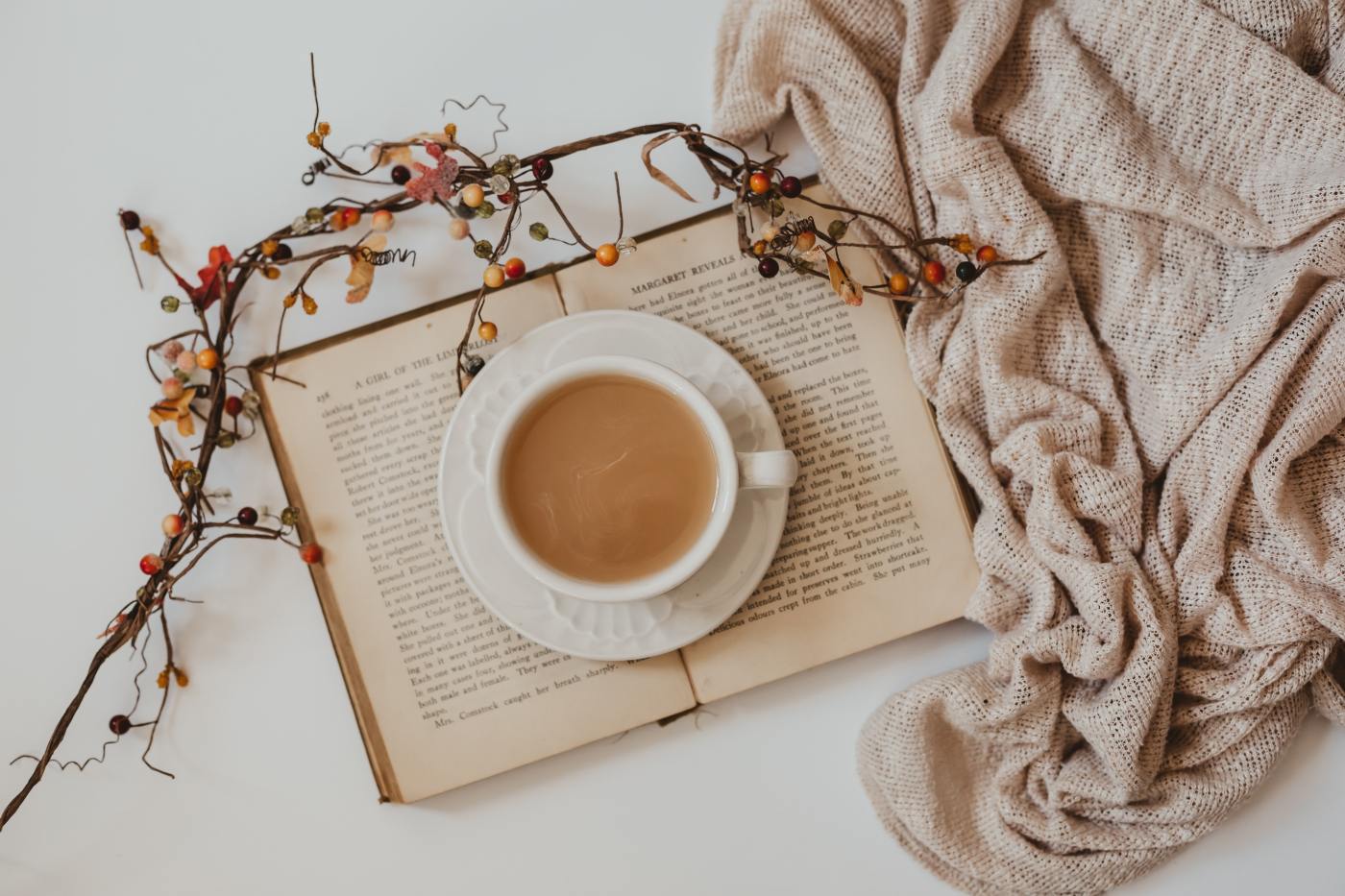
I have thought extensively (for the last ten minutes) about why this might be. One key reason about which I am in no doubt is that Instagram is first and foremost a visual platform, and most of the pictures I take of books look as if I’ve used a camera made out of a turnip and some dental floss. On Monday I was asked by one of the radio presenters how anyone builds up a following on bookstagram, and I responded fairly cynically: you have to have a good-looking grid. My poorly-lit turnip pictures likely won’t get as much online engagement as bloggers who take a lot of care and time to do a chic photoshoot for their book reviews. I would not be surprised if I have at some point absent-mindedly liked an Instagram review of The Very Hungry Caterpillar simply because it had an arty autumnal filter and a soft-focus cappuccino in shot.
This isn’t much of an excuse, because there are a lot of ways to review books that don’t demand taking photos. I have a lot of well-read friends who write blogs and newsletters about what they’re reading. I’ve been thinking about why I’m intimidated by the idea of posting regular book thoughts, and I think it may have something to do with the fact that modern discourse about both the reviewing and the reading of books seems so inextricably tangled with notions of morality.
Reading is a hobby and, for many people, a passion; it is not a virtue. I once knew someone who claimed they didn’t watch television and instead focused their time on reading and academic research, and they did not feel any ostensible shame or a need to defend this choice further. I don’t think I’ve ever heard anyone say something like, ‘I used to be a voracious watcher of Netflix but I’ve not had the time recently, I really want to get back into it though!’ in that slightly embarrassed way people talk about reading when they haven’t had the time or inclination to pick up a book in years. Reading books has taken on a strange mantle of moral superiority in our shared cultural consciousness; we’re conditioned to feel proud for doing it and ashamed if we haven’t. The few times in the past that my mother has become aware of me dating someone, one of the first things she used to ask was whether they read much, and when I was younger I used to feel pleased if I could say that yes, they did, until I realised that great readers can also be despicable people. (Who knew?)
And even when we are consuming literature, there’s an entire subset of coded virtues associated with this. I still feel self-conscious claiming to have ‘read’ something when I’ve listened to an audiobook, because I can’t help wondering if people will think that’s technically cheating. (It obviously isn’t and I firmly believe that Miriam Margoyles performing Bleak House is exactly how Dickens wanted it to be experienced.) I have also dragged myself to the end of books that bored the hole off me because it feels like a personal failure to leave something unfinished. I have seen book reviews online that open with a detailed defence of how hard the reader persevered before they simply had to abandon the book because they weren’t enjoying it. (Again, we don’t attach this kind of logic to other forms of entertainment. No-one watches the first few episodes of The Walking Dead, hates it, and then makes themselves watch eleven more seasons just to say they’ve completed it.) At any given time I have five unfinished novels sitting unread for weeks beside my bed and am almost perpetually behind on my Goodreads target for the year. Part of me shies away from book-blogging because I feel somehow guilty for how scatty my reading habits are, as if I think they should be as neat and regular as squares on an Instagram grid, as if there is some inherent virtue in finishing one book in a timely fashion, summarising my thoughts in a review, and progressing directly to the next one.
Reviewing books—at least, books by living authors—is a practice that also seems to be oddly fraught with ethical discourse. I hesitate sometimes to review books I think are a pile of shite because I worry it will be perceived as a personal attack on the writer or on anyone who enjoyed the book. On social media particularly, negative book reviews often seem to receive backlash from people who conflate valid and constructive criticism with nastiness. For instance, I occasionally listen to Celebrity Memoir Bookclub, a podcast in which comedians Claire Parker and Ashley Hamilton dissect celebrity autobiographies, and a show that receives regular criticism from listeners who complain that the hosts are being mean or bitchy by pointing out the bad writing and poor self-awareness of wealthy famous people who will sell thousands of copies regardless.
I’m sure some negative reviews are motivated by petty snarkiness, personal dislike of an author, or a deliberate desire to be provocative about an otherwise lauded bestseller. It is, however, truly bizarre to see the ways in which a negative literary review can be so uncritically conflated with mean-spiritedness. I do not believe that book reviews should be wilfully unkind, but I also don’t like the idea of ‘if you can’t say something nice, don’t say anything’, because this only serves to perpetuate mediocrity; cultural commentary would just become an endless group wank over the top twenty titles in the Blackwell’s book chart.
It might be too ambitious (and, as it’s fast approaching mid-January, a bit late) to make a new year’s resolution that I will be a more committed book blogger in 2023. I hope that if I do eventually wheel out the defibrillator and shock my Instagram account back into action, I will write more honest critiques (and take better pictures). Mainly, I hope that this is the year I can divorce reading books from ideas of superior virtue, and stop thinking of it as the kind of accomplishment by which heroines are measured in Jane Austen plots. Expect some very spicy takes on The Very Hungry Caterpillar forthwith.
Cover photo by Sixteen Miles Out on Unsplash
 good strong words